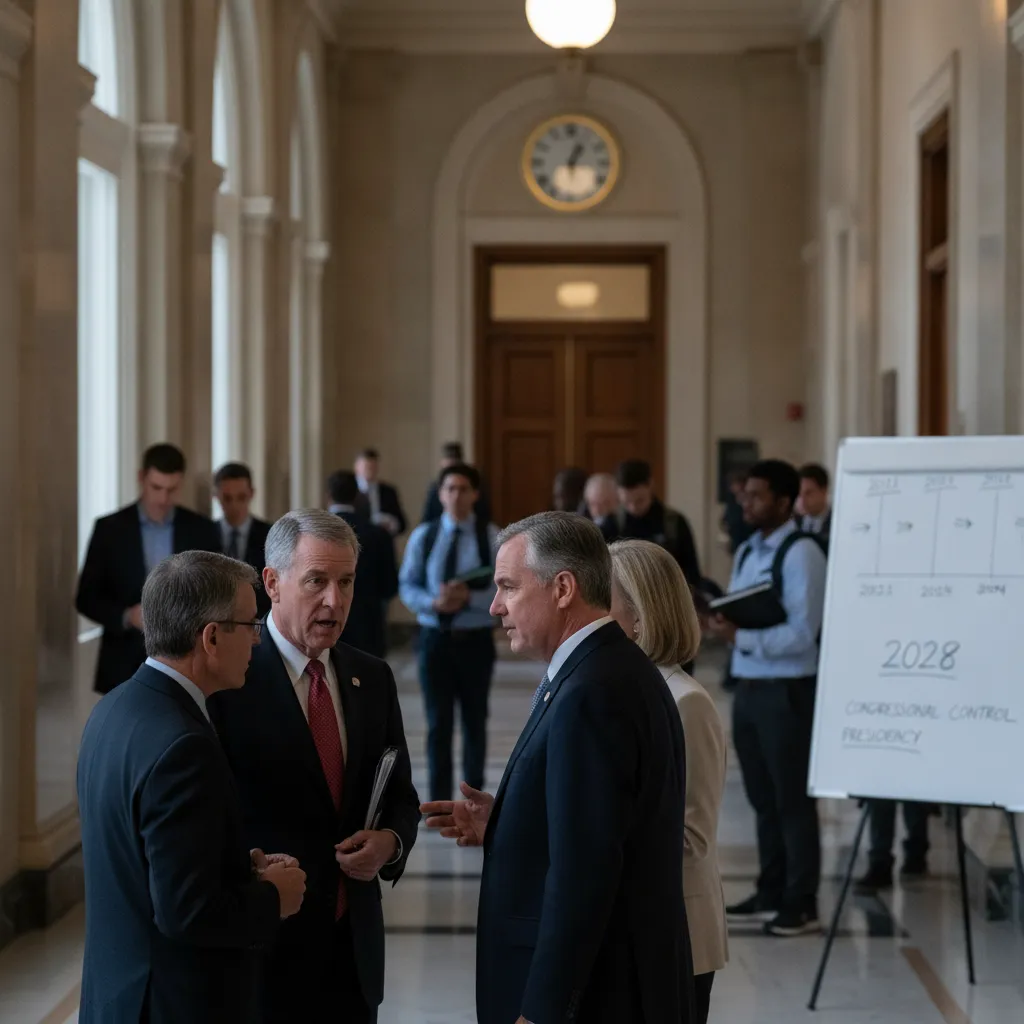
While much of the current political conversation focuses on the immediate fallout of the upcoming midterms, the real story lies in how these results will ripple across the next decade. For those looking past the horizon of Donald Trump’s second term, the stakes are incredibly high. Control of Congress determines more than just which bills pass in the short term; it sets a structural foundation that could either empower or paralyze whoever enters the Oval Office in 2029. Because Senators serve six year terms, the victors of this cycle will remain in power until 2033, potentially acting as a permanent roadblock for a future president from the opposing party.
The Senate map reveals a precarious situation for Republicans, particularly if they struggle to hold ground in traditionally deep red territory. If Democrats manage to flip seats in states like Texas or Alaska, they create a lasting barrier that persists well into the next administration. Conversely, should Republicans maintain their grip on these strongholds or secure upsets in swing states like Michigan, they could leave any incoming Democratic president facing a nightmare scenario of divided government. History shows that since 1989, it has been rare for a new president to start their tenure without their own party controlling both houses of Congress, and doing so often puts an early dagger through their legislative goals and judicial appointments.
Meanwhile, the battle for the House offers a shorter but equally critical lesson in momentum. Historically, opposition parties tend to peak during midterms and see their gains erode during presidential cycles. This means Democrats cannot afford a narrow victory; they need a significant cushion now to avoid losing their footing by 2028. Even small shifts in membership can signal broader trends about voter appetite for specific ideologies heading into a general election year.
Nowhere is this tension more visible than in places like Kansas, where long standing GOP streaks are suddenly under threat. With candidates like Pastor Adam Hamilton attempting to break decades of Republican dominance inruby red territory, there is evidence that traditional partisan boundaries are shifting. Whether it is due to frustrations over agricultural costs or immigration enforcement, these localized battles reflect a larger national volatility. Ultimately every single seat defended or flipped serves as a building block for whichever party hopes to dominate American politics leading toward 2030 and beyond.